



Angiotensin Receptor
Angiotensin receptors are a class of G protein-coupled receptors with angiotensin II as their ligands. They are important in the renin-angiotensin system: they are responsible for the signal transduction of the vasoconstricting stimulus of the main effector hormone, angiotensin II. The AT1 and AT2 receptors have a similar affinity for angiotensin II, which is their main ligand. The AT1 receptor is the best elucidated angiotensin receptor. AT2 receptors are more plentiful in the fetus and neonate. Other poorly characterized subtypes include the AT3 and AT4 receptors.
Angiotensin Receptor Isoform Specific Products
All Product Categories
-
Angiotensin Receptor Inhibitors
(34)
View all products
-
Angiotensin Receptor Agonists
(24)
View all products
-
Angiotensin Receptor Antagonists
(164)
View all products
-
Angiotensin Receptor Activators
(33)
View all products
-
Angiotensin Receptor Modulators
(3)
View all products
-
Angiotensin Receptor Chemicals
(2)
View all products
-
Angiotensin Receptor Ligands
(2)
View all products
-
Angiotensin Receptor Related Products (300)
Related Products (300)

-
Antibodies (7)
-
Angiotensin Receptor Isoform Comparison
-
Biotin-Ahx-Angiotensin II human
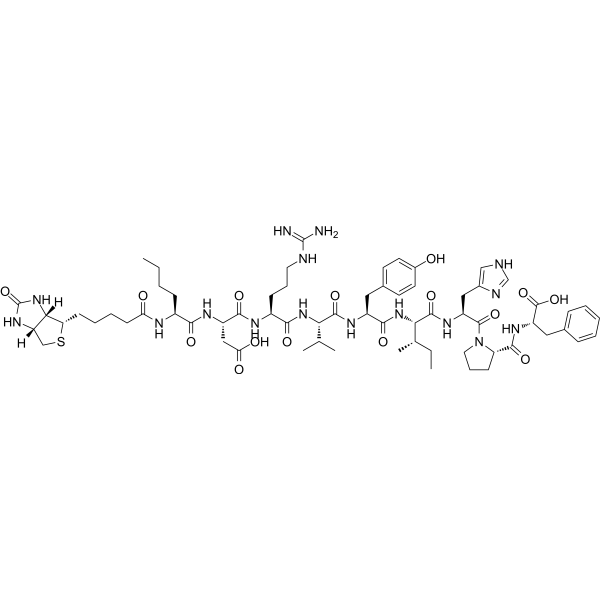 0 ImagesSynonyms: Biotin-Ahx-Angiotensin II; Biotin-Ahx-Ang II; Biotin-Ahx-DRVYIHPFBiotin-Ahx-Angiotensin II human (Biotin-Ahx-Angiotensin II; Biotin-Ahx-Ang II; Biotin-Ahx-DRVYIHPF) is a biological active peptide. (biotin labeled HY-13948)
-
TRV056
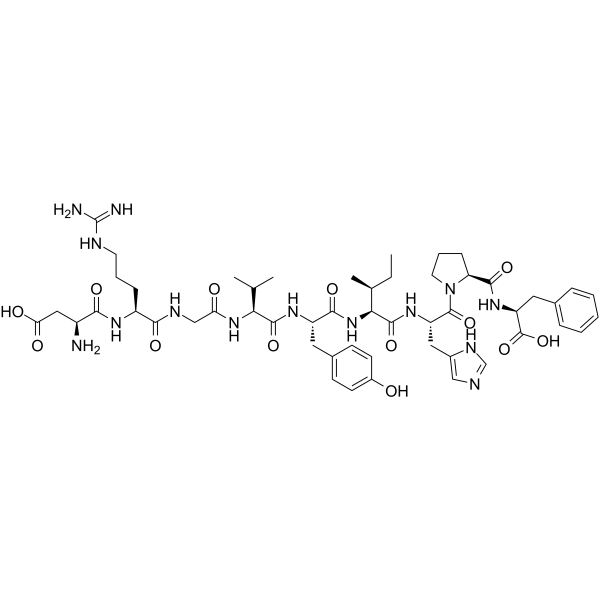 0 ImagesTRV056 is a Gq-biased ligand of the angiotensin II receptor type 1 (AT1R). TRV056 is efficacious in stimulating cellular Gq-mediated signaling. TRV056 can be used to develop the Gq-biased AT1R agonists.
-
Peptide ligase
 0 ImagesCat. No.: HY-E70421Peptide ligase is an Asx-specific asparaginyl endopeptidase (AEP) ligase and cyclase that can be isolated from the pods of butterfly pea (Clitoria ternatea). Peptide ligase mediates traceless intramolecular cyclization of polypeptides. Peptide ligase mediates intermolecular ligation of polypeptides or proteins. Peptide ligase can be used to cyclize food-derived angiotensin-converting enzyme (ACE) inhibitory peptides, thereby enhancing the stability and biological activity of ACE inhibitory peptides. Peptide ligase is applicable to relevant research in the fields of food and biopharmaceuticals.
-
Valsartan Ethyl Ester
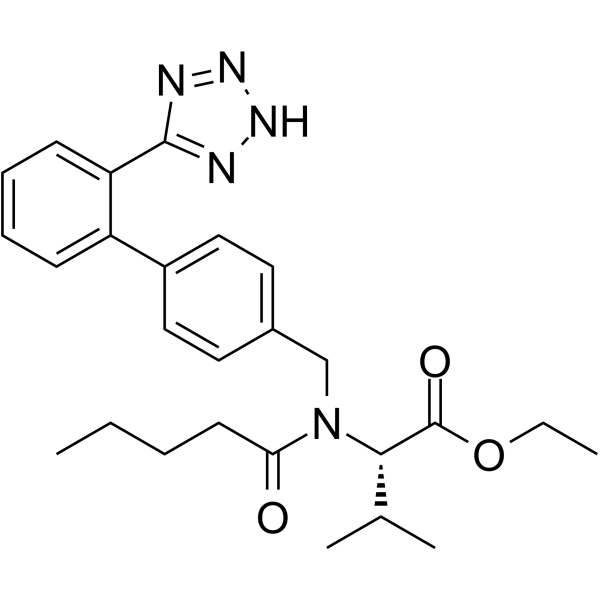 0 ImagesValsartan Ethyl Ester is an impurity of Valsartan. Valsartan is an angiotensin II receptor antagonist for the treatment of high blood pressure and heart failure.
-
Losartan-d4 (carboxylic acid)
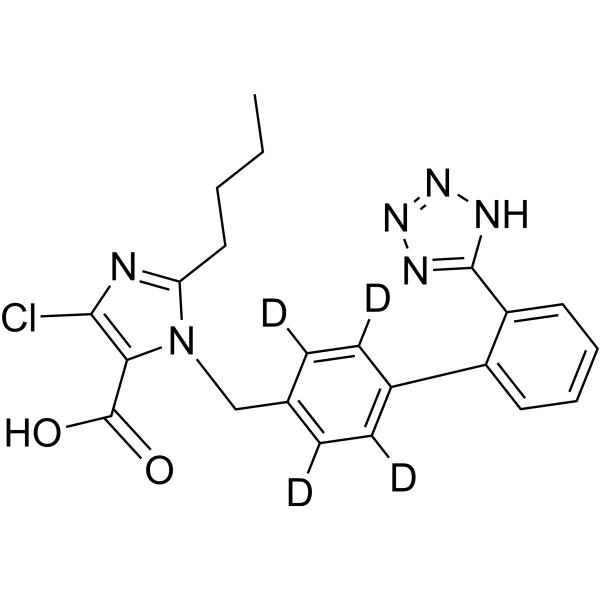 0 ImagesSynonyms: E-3174 d4; EXP-3174 d4Losartan-d4 carboxylic acid (E-3174-d4) is the deuterium labeled Losartan Carboxylic Acid (HY-12765). Losartan Carboxylic Acid (E-3174), an active carboxylic acid metabolite of Losartan, is an angiotensin II receptor type 1 (AT1) antagonist. The Ki values are 0.97, 0.57, 0.67 nM for rat AT1B/AT1A and human AT1, respectively. Losartan Carboxylic Acid blocks the angiotensin II-induced responses in vascular smoothmuscle cells (VSMC). Losartan Carboxylic Acid elevates plasma renin activities and reduces mean arterial pressure.
-
Losartan-d4
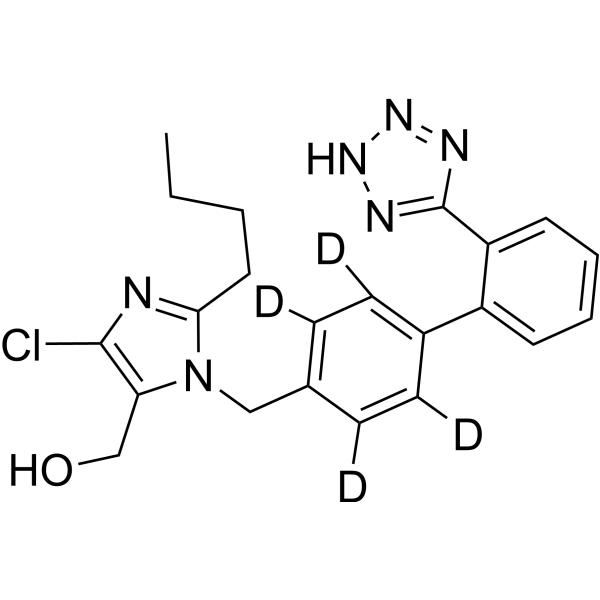 0 ImagesSynonyms: DuP-753 d4Losartan-d4 is the deuterium labeled Losartan. Losartan is an angiotensin II receptor antagonist, competing with the binding of angiotensin II to AT1 receptors with IC50 of 20 nM.
-
Aclerastide
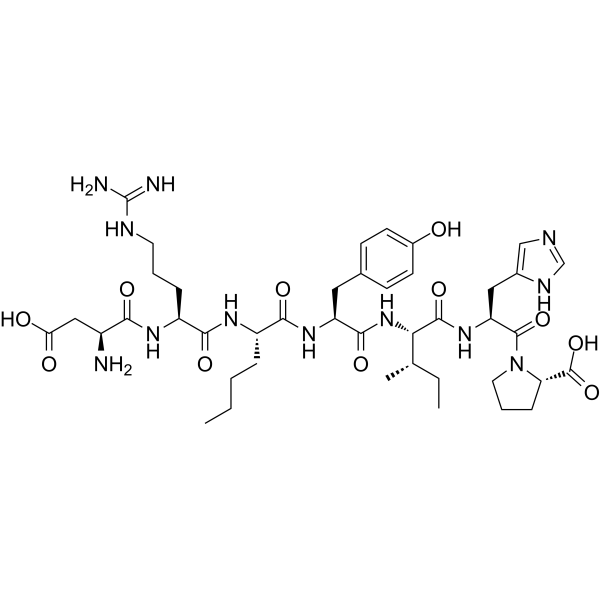 0 ImagesSynonyms: DSC-127; NorLeu3-A(1-7)Aclerastide (DSC-127) is an angiotensin receptor agonist. Aclerastide also is a peptide analog of angiotensin II. Aclerastide can be used for the research of tissue regeneration in diabetic ulcers.
-
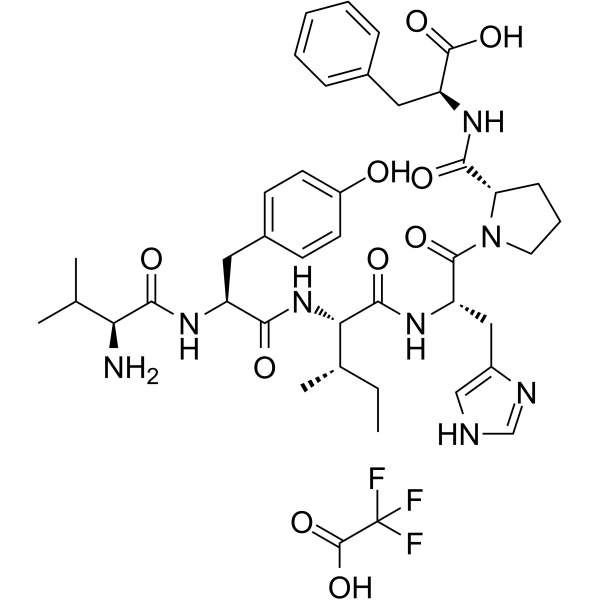
(D-Pro7)-Angiotensin I/II (1-7)
 0 Images(D-Pro7)-Angiotensin I/II (1-7) is a potent Mas receptor inhibitor with a Ki of 0.001 μM for rat receptors. (D-Pro7)-Angiotensin I/II (1-7) competitively blocks the binding of Angiotensin-(1-7) to the Mas receptor and attenuates the vasodilatory effect of rat aortas under physiological and hypertensive conditions. (D-Pro7)-Angiotensin I/II (1-7) can be used for studies on the function of the renin-angiotensin system and the pathological mechanisms of hypertension.
-
Candesartan-d4
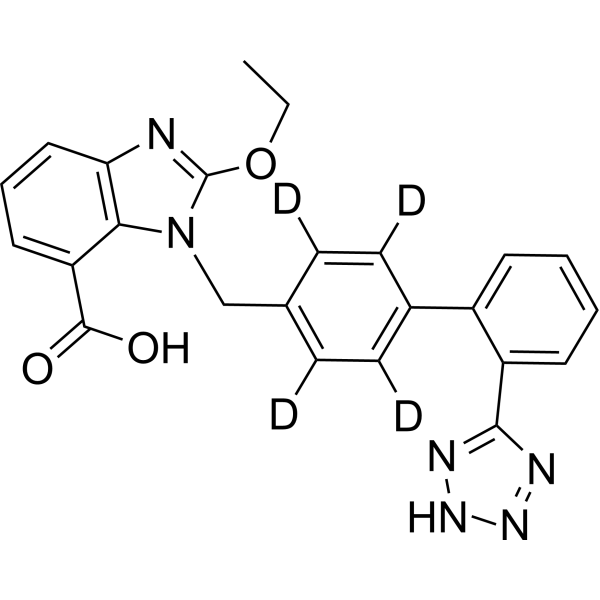 0 ImagesSynonyms: CV-11974-d4Candesartan-d4 (CV-11974-d4) is the deuterium labeled Candesartan (HY-B0205). Candesartan (CV 11974) is an orally active angiotensin II AT1-Receptor blocker and PPAR-γ agonist. Candesartan has potent and long-lasting antihypertensive effects. Candesartan can be used for the research of hypertension, chronic heart failure (CHF) and Traumatic brain injury (TBI).
-
BIBS 39
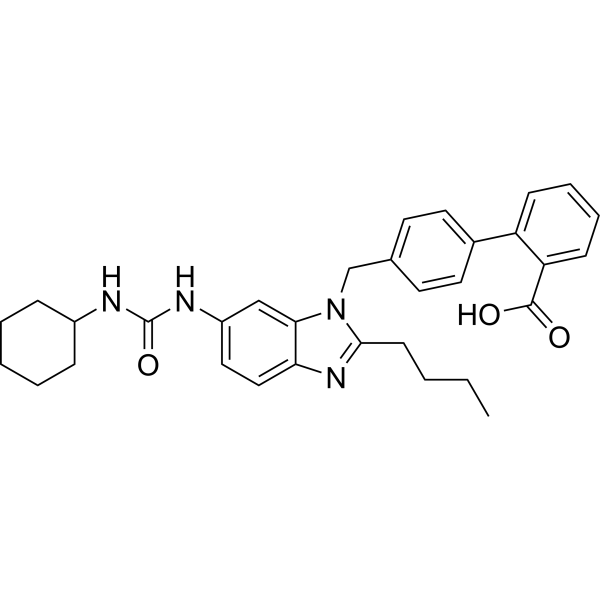 0 ImagesBIBS 39 is a non-peptide angiotensin II receptor antagonist with antihypertensive activity, with higher affinity for the AT1 receptor than for the AT2 receptor. BIBS 39 competitively blocks AT1-mediated vasoconstriction and pressor responses, and effectively inhibits the activity of the renin-angiotensin-aldosterone system. BIBS 39 reduces diastolic blood pressure and induces mild, transient reflex tachycardia, with no off-target functional activity on the norepinephrine, K+/Cl− or vasopressin pathways. BIBS 39 can be used in research related to hypertension and renal hypertension[1][2][3].
-
L-162313
 0 ImagesL-162313 is a non-peptide angiotensin II AT1 and AT2 receptor agonist, with IC50 values of 1.1 and 2.0 nM for AT1 and AT2 receptor, respectively. L-162313 can be used for the research of vasoconstriction, aldosterone release, and cardiovascular growth.
-
Zilebesiran
 0 ImagesCat. No.: HY-145649CAS No.: 2380166-33-4Synonyms: AD-85481; ALN-AGTZilebesiran is a siRNA that reduce hepatic angiotensinogen levels through RNA interference. it is used for the study of mild to moderate Hypertension. Angiotensinogen is the predominant precursor of angiotensin peptides and a key regulator of systemic blood pressure.
-
L-161638
 0 ImagesL-161638 is a potent, selective and orally active AT2 receptor antagonist. L-161638 can be used for the research of cardiovascular disease, such as hypertension.
-
ZD 7155hydrochloride
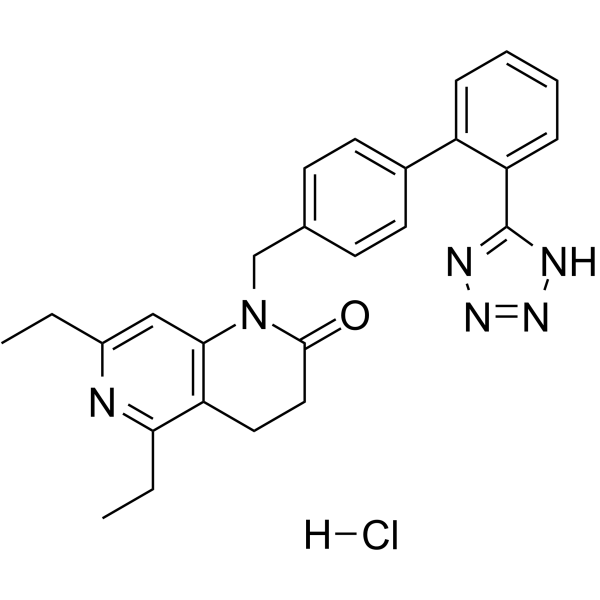 0 ImagesZD 7155 hydrochloride is an angiotensin II receptor type 1 (AT1 receptor) antagonist.
-
Angiotensin II (5-8), human
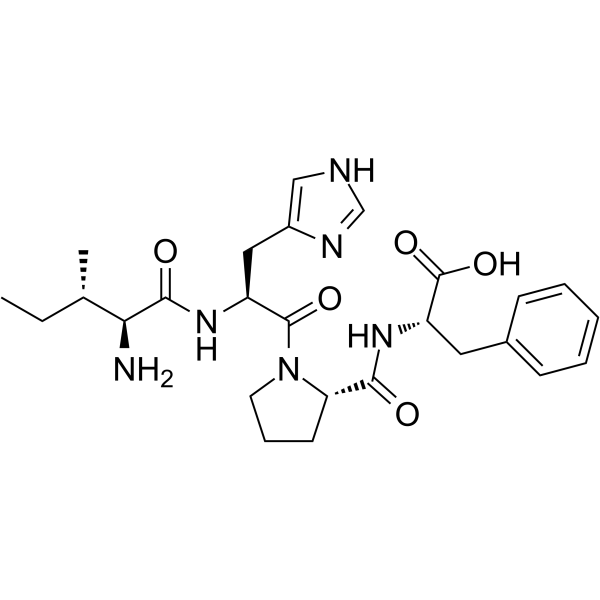 0 ImagesAngiotensin II (5-8), human is an endogenous C-terminal fragment of the peptide vasoconstrictor angiotensin II. Angiotensin II binds the AT II type 1 (AT1) receptor, stimulating GPCRs in vascular smooth muscle cells and increasing intracellular Ca2+ levels. Angiotensin II also acts at the Na+/H+ exchanger in the proximal tubules of the kidney.
-
Valsartan methyl ester
 0 ImagesSynonyms: CGP 48933 methyl esterValsartan (CGP 48933) methyl ester is the methyl ester derivative of Valsartan (HY-18204). Valsartan is a selective and orally active angiotensin II type 1 (AT1) receptor blocker (ARB) with potent antihypertensive and cardioprotective effects. Valsartan competitively binds to AT1 receptors, inhibiting the binding of angiotensin II to AT1 receptors, thereby blocking angiotensin II-mediated vasoconstriction, sodium retention, and myocardial hypertrophy signaling pathways. Valsartan reduces systolic blood pressure in L-NAME-induced hypertensive rats. Valsartan can be used for the study and treatment of arterial hypertension, hypertensive heart disease, and heart failure.
-
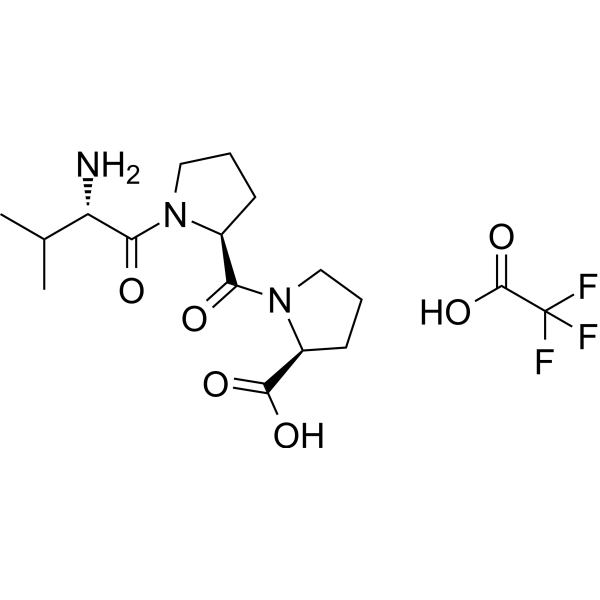
Spinorphin TFA
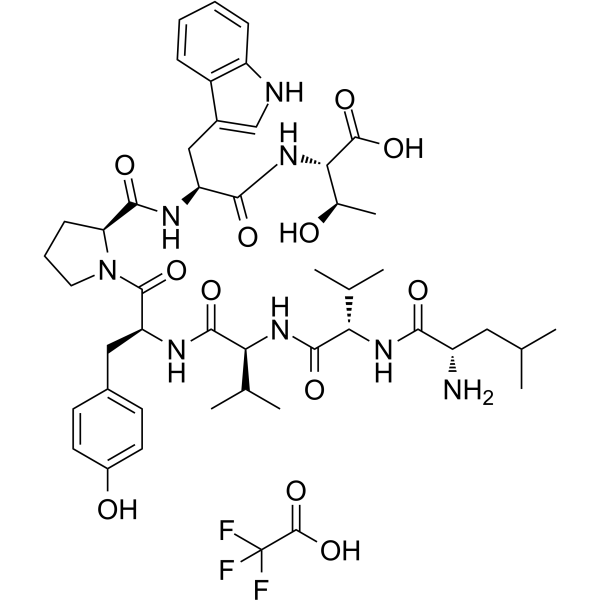 0 ImagesSynonyms: LVV-hemorphin-4 TFASpinorphin TFA is an inhibitor of enkephalin-degrading enzymes. Spinorphin inhibits aminopeptidase, dipeptidyl aminopeptidase III, angiotensin-converting enzyme and enkephalinase. Spinorphin possesses an antinociceptive effect.




